Why Buying Legal Leads Beats Cold Outreach for Attorneys

Why Buying Legal Leads Beats Cold Outreach for Attorneys

Buying legal leads has become the growth strategy of choice for US attorneys who want more clients without the grind of cold outreach — and the numbers explain exactly why.

If you’ve spent hours crafting cold emails, calling bar-association directories, or waiting for referrals that never come, you already know the problem: traditional outreach is slow, unpredictable, and expensive in both time and money. In 2025, 78% of US attorneys now use some form of lead generation rather than relying solely on word of mouth or cold contact. This guide breaks down why buying legal leads from a targeted provider — like ThelawyerLeads.com — beats cold outreach on every meaningful metric.


The Real Cost of Cold Outreach for Attorneys

Cold outreach sounds free — but it is not. Every hour you spend prospecting is an hour you are not billing. When you factor in staff time, email-tool subscriptions, bar-compliance research, and the opportunity cost of low response rates, cold outreach quickly exceeds what a quality lead would have cost.

Consider the math: the average attorney hourly rate in the US sits above $300. If you spend just 10 hours a month on cold outreach — drafting, following up, tracking responses — that is $3,000 in opportunity cost, often for fewer than 3 to 5 qualified conversations. Buying legal leads inverts that equation entirely.

The average cost-per-lead for legal services via paid channels is $131.63 (WordStream, 2025) — a fraction of the true cost of cold outreach once attorney time is factored in.


Why Buying Legal Leads Delivers a 5x ROI Advantage

Lead generation platforms connect you directly with prospects who have already expressed a legal need. These are not cold contacts — they are people actively searching for an attorney in your practice area and geography, often right now. The targeting precision alone explains the 5x ROI advantage that lead buyers report over cold-outreach campaigns.

Metric Cold Outreach Buying Legal Leads (ThelawyerLeads)
Lead intent None — unsolicited contact High — prospect has expressed need
Geographic targeting Manual list-building by state ZIP-code and county-level precision
Time to first contact Days to weeks Minutes — real-time delivery
Exclusivity N/A Exclusive options available
Contracts required N/A None — pay as you go
ROI vs cold outreach Baseline Up to 5x higher

What Makes ThelawyerLeads Different from Other Legal Lead Platforms

Not all legal lead providers are created equal. Many recycle leads across dozens of attorneys, use broad state-level targeting, and lock you into annual contracts. ThelawyerLeads.com was built to solve exactly those pain points for US attorneys.

13 Practice Areas, ZIP-Level Targeting

With coverage across 13 practice areas — from personal injury and bankruptcy to family law, immigration, and criminal defense — you only pay for leads that match your exact specialty. ZIP-code and county-level filters ensure every lead is a prospect who lives and searched within your serviceable area.

No Long-Term Contracts, State-Specific Pricing

The platform operates on a pay-as-you-go model. You can scale up in high-demand months, pause during vacations, and never worry about being locked into a commitment that outlasts your growth plan. Pricing is transparent and broken down by state, so you know exactly what a lead costs in your market before you buy.

Practice Area Avg. National CPL Exclusivity Option
Personal Injury $159.17 Yes
Bankruptcy $131.63 avg. Yes
Family Law $103.54 Yes
Immigration $131.63 avg. Yes
Criminal Defense $131.63 avg. Yes

Key Insight

Attorneys who switch from cold outreach to a targeted legal lead platform report converting at 2 to 3 times the rate — because the prospect already has a legal problem and is actively looking for help. Speed of response, not persuasion skill, becomes the primary conversion lever.


How to Maximize ROI When Buying Legal Leads

Buying legal leads is only half the equation. Speed and process determine whether a high-intent prospect becomes a paying client.

  • Call within 5 minutes. Conversion rates drop sharply if an inbound lead is not contacted within the first hour. Aim for under 5 minutes whenever possible.
  • Use a local number. Prospects are more likely to answer calls from area codes they recognise. ZIP-targeted leads pair naturally with local caller-ID solutions.
  • Have a follow-up sequence. Most leads need 2 to 5 touches before booking. A short email or SMS sequence prevents good leads from going cold.
  • Track CPL vs. cost-per-case. Cost-per-lead is the input metric; cost-per-signed-case is the one that matters for profitability. Monitor both monthly.

Why Buying Legal Leads Beats Cold Outreach — Summary

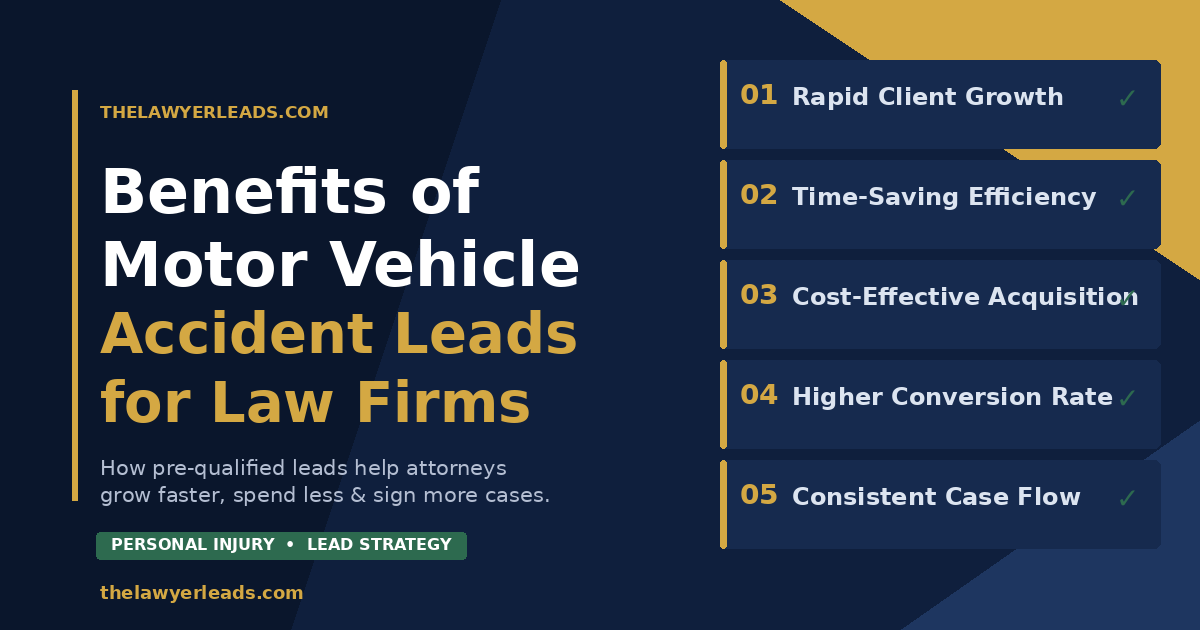
  1. Higher intent, faster close — purchased leads are actively seeking legal help, not being interrupted like cold-outreach targets.
  2. Real cost savings — at $131.63 average CPL versus hundreds in attorney time, the economics of buying leads are compelling.
  3. Precision targeting — ZIP- and county-level filters ensure you only pay for prospects in your service area.
  4. Scalability without contracts — grow or pause your lead volume on demand, with no long-term commitment.
  5. 5x ROI advantage — data from attorneys using lead platforms consistently shows returns far exceeding cold-outreach benchmarks.

See Lead Pricing for Your State

We offer transparent, state-specific lead pricing across all major practice areas — with no contracts, no recycled contacts, and full exclusivity options.

View Lead Pricing

Source: WordStream 2025 Google Ads Benchmarks. CPL figures represent legal industry averages across Google Ads campaigns.

How to Approach Law Firms About Legal Lead Generation: Scripts & Templates

How to Approach Law Firms About Legal Lead Generation: Scripts & Templates

The biggest mistake affiliates make when approaching attorneys is leading with the platform. Lead with the problem it solves instead. Most attorneys have been burned by lead gen — your job is to explain, in one sentence, why this is structurally different. These scripts do exactly that.

The One Sentence That Opens Every Door

Before any script, memorise this line. It works in every format — email, text, in person:

The pitch

“Unlike most lead gen companies, you filter what you buy before you pay — state, case type, urgency. So your first lead is already the right fit. No wasted budget, no testing phase.”

Once an attorney hears that, they want to know more. Everything below is built around that core argument.

Cold Email Script

Subject: Getting more [practice area] clients — quick question
Hi [NAME],

Most legal lead gen platforms make attorneys buy blind — you pay, you get a contact, and only find out if it fits afterwards.

I partner with The Lawyer Leads, which works differently. Attorneys filter every order before buying — by state, case type, and urgency — so the first lead already matches their practice. No testing phase, no wasted budget.

Exclusive leads, no contract, buy what you need when you need it.

Would it be worth a 10-minute call to see if it’s a fit for your [PRACTICE AREA] practice?

[YOUR NAME]
[YOUR LINK]

Warm Introduction (Via Mutual Contact)

Subject: [MUTUAL CONTACT] suggested I reach out
Hi [NAME],

[MUTUAL CONTACT] mentioned you’re always looking for ways to grow your client base — thought I’d reach out.

I partner with The Lawyer Leads. What makes it different from other platforms you may have tried: attorneys filter every order before they buy (state, case type, urgency), so there’s no guesswork and no wasted spend.

Exclusive leads, no subscription, no lock-in.

Happy to share more if useful — here’s the link:
[YOUR LINK]

[YOUR NAME]

WhatsApp / Text Message

Hi [NAME]! Hope you’re well.

Quick one — I partner with a legal lead gen platform that’s different from the rest. Attorneys filter every order before paying (state, case type, urgency), so the first lead already fits their practice. No contract.

Thought of you — here’s the link if you want to take a look: [YOUR LINK]

Handling Objections

“I tried lead gen before and it didn’t work.”
Most platforms sell you blind — you pay and hope it fits. Here you filter before you buy: state, case type, urgency. Your first lead is already the right type. No testing phase.

“How do I know the leads are good quality?”
They’re people who actively searched for a lawyer and submitted their details. Exclusive to one firm — not shared with five other attorneys. And you choose the specifics before you buy.

“I already have enough clients.”
Great — this is for when you need to fill gaps on demand. No subscription, no minimum. Buy what you need, when you need it. Dial it up or down.

“What’s the catch?”
No contract, no monthly minimum, no lock-in. Buy one lead to try it. The filters mean it already fits — so you’re not taking a blind risk.

More resources

Full guide with more templates in the affiliate portal

Including LinkedIn messages, follow-up emails, and a full FAQ — all copy-paste ready.

Read the Full Guide →

Which Types of Attorneys Buy Legal Leads Most?

Which Types of Attorneys Buy Legal Leads Most?

Not every attorney is an equally good referral target. Some practice areas have far higher lead demand than others — and understanding which types of attorneys buy most frequently means you can focus your outreach where it’s most likely to convert.

The High-Demand Practice Areas

#1
Personal Injury Attorneys
Highest Volume

PI attorneys live and die by client acquisition. A single signed client can represent tens of thousands in fees, so spending on leads has clear ROI. They buy regularly, in bulk, and tend to become repeat customers. Target: solo practitioners and small firms (1–5 attorneys) who don’t have a full marketing department.

#2
Criminal Defense Attorneys
High Urgency

Criminal cases are time-sensitive — defendants need representation fast. This urgency makes criminal defense attorneys particularly receptive to leads with urgency filters. They need a steady pipeline of clients and often can’t rely on referrals alone. Target: DUI specialists, drug offense attorneys, and general criminal defense firms.

#3
Immigration Attorneys
High Repeat

Immigration law has constant demand across the US. Visa applications, green cards, deportation defence, asylum cases — the volume of people needing help is enormous and doesn’t slow down. Immigration attorneys who find a reliable lead source tend to buy consistently. Target: firms in major metro areas with large immigrant populations.

#4
Family Law Attorneys

Divorce, custody, and family law cases are emotionally driven — people search actively when they need help. Family law attorneys often see strong lead-to-consult conversion because prospects are motivated. Target: solo family law practitioners and small firms.

#5
Traffic Ticket & DUI Attorneys
High Volume

Traffic and DUI cases are high volume, lower fee — which means these attorneys need a constant stream of new clients to maintain revenue. They’re often actively looking for lead sources and respond well to the filter system (they can filter by violation type, state, urgency). Target: dedicated traffic/DUI firms and general criminal defense attorneys who handle traffic cases.

Who to Prioritise in Your Outreach

The ideal referral target
✓ Solo practitioner or small firm (1–10 attorneys)
✓ Practice area in the high-demand list above
✓ No in-house marketing or SEO team
✓ Based in a high-population state (CA, TX, FL, NY, IL)
✓ Has tried lead gen before and was disappointed — the filter argument resonates most with these attorneys

For a full guide on how to find and approach attorneys — including LinkedIn search tips, email scripts, and objection handling — see our scripts & templates post and the affiliate getting started guide.

Ready to start referring?

Join the affiliate programme — free, instant access

Your referral link is ready immediately. Start with the attorneys you already know.

Become an Affiliate →

How Much Can You Earn as a Lawyer Leads Affiliate?

How Much Can You Earn as a Lawyer Leads Affiliate?

The first question everyone asks before joining an affiliate programme is: what can I actually earn? The honest answer depends on how many attorneys you refer and how much they buy. But the structure of the The Lawyer Leads programme — cashback on first orders plus lifetime recurring commission — means earnings compound in a way most programmes don’t.

The Two Income Streams

💰
Cashback on First Order
When your referral places their very first paid order, you earn a one-time cashback commission. Up to 25% depending on your tier.
10–25%
of first order value

🔁
Lifetime Recurring Commission
Every time your referral buys leads in the future — any order, any time — you earn a recurring commission. For life. No expiry.
1–5%
of every future order

Earnings by Tier

Tier Cashback Recurring Who qualifies
🌱 Starter 10% 1% New affiliates
⭐ Growth Partner 20% 3% Active affiliates
🏆 Premium Partner 25% 5% Top partners & agencies

Why Recurring Commission Compounds

Most affiliate programmes pay you once per referral. Here, every time your referral buys more leads in the future, you earn again — automatically, indefinitely. The more attorneys you refer, and the more they buy, the more your passive income grows.

An example
Month 1
You refer 2 attorneys. Each places a first order. You earn cashback on both.

Month 3
Both attorneys buy again. You earn recurring commission on both orders — without doing anything.

Month 6
You’ve added 4 more referrals. You’re now earning recurring commission from 6 attorneys every time any of them buys.

Result
Your recurring income grows with every referral you add, and doesn’t stop when you stop actively referring.

How to Reach the Higher Tiers Faster

🎯
Target the right attorneys first. Personal injury, criminal defense, and immigration attorneys buy most frequently. Start with these practice areas to build referral volume faster.

📋
Use the filter pitch. Attorneys who’ve been burned by lead gen before are the best targets — the filter argument converts them. See our scripts & templates guide.

🔗
Share consistently. Add your referral link to your email signature, LinkedIn profile, and any legal content you publish. Passive sharing adds up over time.

Start building your passive income

Join free — no approval needed, link ready instantly

Read the getting started guide to hit the ground running.

Become an Affiliate →

How to Earn with The Lawyer Leads Affiliate Programme

How to Earn with The Lawyer Leads Affiliate Programme

The Lawyer Leads affiliate programme lets you earn cashback every time an attorney you’ve referred places their first order — and then a recurring commission on every lead purchase they make after that, for life. There’s no cap, no contract, and no approval wait. Your referral link is ready the moment you join.

How It Works

1
Join freecreate your affiliate account in under 2 minutes. No approval process. Your unique referral link is available immediately in your dashboard.

2
Share your link with attorneys, law firms, and anyone in the legal industry — via email, LinkedIn, WhatsApp, or in person. Anyone who clicks and registers is tracked to you for 100 days.

3
They buy leads — when your referral places their first paid order, you earn a cashback commission. Your tier determines the percentage.

4
Keep earning forever — every time your referral buys more leads in the future, you earn a recurring commission. One referral can pay you month after month, indefinitely.

Commission Tiers

Your commission rate is determined by your tier, which upgrades automatically as you refer more attorneys:

🌱
Starter
New affiliates
10%
cashback
+ 1% recurring

Growth Partner
Active affiliates
20%
cashback
+ 3% recurring

🏆
Premium Partner
Agencies & top partners
25%
cashback
+ 5% recurring

The 100-Day Cookie

When an attorney clicks your referral link, a 100-day tracking cookie is set. This means you earn commission even if they don’t buy straight away — if they register and place an order at any point within those 100 days, it’s credited to you automatically.

Why this matters

Attorneys often take time to decide. They might click your link, browse the platform, and buy three weeks later. You still get credited. Most lead gen affiliate programmes use a 7–30 day window. 100 days means you capture referrals who need time to consider.

What You Can Earn

Legal leads aren’t cheap — which works in your favour. A single attorney ordering a batch of personal injury leads can represent a significant order value. At 25% cashback on that first order alone, one well-placed referral makes a real difference. And the recurring commission compounds over time as that attorney keeps buying.

✓ No cap on referrals
✓ No cap on earnings
✓ Tiers upgrade automatically
✓ Payouts on request

Start earning today

Join free — your referral link is ready in 2 minutes

Read our getting started guide for scripts, templates, and tips on finding the right attorneys to approach.

Become an Affiliate →

Why Attorney Lead Generation Fails (And How Filters Fix It)

Why Attorney Lead Generation Fails (And How Filters Fix It)

If you’ve ever recommended lead generation to an attorney and been met with a sigh or an eye-roll, you already know the problem. Most attorneys have tried it. Most of them were disappointed. And most of them have no intention of trying it again. That’s not because legal lead generation doesn’t work. It’s because of how it’s almost always sold.

Why Most Lead Gen Fails Attorneys

The typical legal lead generation experience follows the same pattern:

1
An attorney signs up — often on a monthly subscription with a minimum spend.

2
Leads arrive. Some are the wrong state. Some are the wrong case type. Some are for practice areas the firm doesn’t even handle.

3
The attorney spends weeks or months “testing” — trying to figure out if the leads are any good before deciding whether to keep paying.

4
By the time they have a clear picture, they’ve already wasted significant budget on leads that didn’t fit.

This is the core failure: attorneys are buying blind. They pay first and find out what they got afterwards. It’s a gamble dressed up as a service — and it leaves a market full of burned attorneys who’ve written off lead generation entirely, even though their underlying problem (not enough of the right clients) hasn’t gone away.

The Filter Difference

The Lawyer Leads was built to solve exactly this. Instead of selling attorneys a mystery box, the platform lets them filter every order before they buy. Before spending a penny, an attorney sets their exact criteria:

📍
State & Location
Only leads from the states and counties they actually serve.

⚖️
Practice Area & Case Type
Personal injury, criminal defense, immigration, family law, traffic tickets, and more.

⏱️
Urgency Level
Urgent cases (court date soon) or standard enquiries — attorneys choose what fits their capacity.

🔢
Quantity Control
No subscription. Buy one lead or fifty — exactly when they need them.

The Result

Their first lead is already the right fit. No testing phase. No wasted budget figuring out if the platform works for their practice. No guesswork.

What This Means in Practice

Think about the most common objection you’ll hear when approaching attorneys about lead generation:

“I tried lead gen before and it didn’t work.”

❌ Weak answer (most platforms)

“This one might be different — give it a try.”

✓ Structural answer (The Lawyer Leads)

“You filter what you buy before you pay — state, case type, urgency. Your first lead already fits your practice. You’re not testing anything.”

That’s not a pitch. That’s a structural argument. And it’s one that addresses the specific reason attorneys stopped buying leads in the first place.

No Contract, No Subscription, No Pressure

On top of the filter system, there’s no subscription and no long-term commitment. Attorneys buy leads when they need them, in the quantity they want.

✓ No monthly minimum
✓ No long-term contract
✓ Buy one or fifty
✓ Stop anytime

This removes the other major barrier to re-entry for burned attorneys: the fear of being locked in. There’s no lock-in. Buy what you need, when you need it.

Why This Matters for Affiliates

If you’re referring attorneys to The Lawyer Leads as an affiliate, the filter system is your strongest argument — especially with attorneys who’ve already had a bad experience with lead generation. You don’t need to convince them that lead gen works. You need to explain why this is structurally different from what they’ve tried before.

The one-liner that works

“Unlike most platforms, you filter what you buy before you pay — state, case type, urgency. So your first lead is already the right fit. No wasted budget, no testing phase.”

Once an attorney hears that, the conversation changes. The filters aren’t a feature — they’re the answer to the objection.

Ready to start earning?

Join the affiliate programme — it’s free and takes 2 minutes

Your referral link is ready immediately. Our getting started guide has scripts, email templates, and everything you need.

Become an Affiliate →

Why Buying Legal Leads Beats Cold Outreach for Attorneys

Why Buying Legal Leads Beats Cold Outreach for Attorneys

Cold outreach is expensive, time-consuming, and increasingly ineffective — yet thousands of attorneys still rely on it as their primary growth strategy. In 2025, the smarter move is buying targeted legal leads, and the numbers prove it.


Why Buying Legal Leads Beats Cold Outreach

Cold outreach — whether that’s cold calling, unsolicited emails, or door-to-door networking — requires significant investment of attorney time and staff resources, often with unpredictable results. The prospect hasn’t raised their hand. They haven’t searched for an attorney. They may not even have a legal need right now.

Buying legal leads flips this model entirely. Instead of interrupting strangers, you’re connecting with people who have already identified a legal problem and are actively seeking help. According to WordStream’s 2025 Google Ads Benchmarks, the average cost per lead across all legal verticals is $131.63 — a figure that looks very different when you factor in conversion rates and case value.

78% of attorneys now use some form of legal lead generation in their client acquisition strategy — up from just 52% five years ago. The shift is real, and it’s driven by results.


The Real Cost of Cold Outreach vs. Buying Legal Leads

When attorneys calculate the true cost of cold outreach, they often underestimate the hidden expenses. Below is an honest comparison of what each approach actually costs a typical small law firm over the course of a month:

Cost Factor Cold Outreach Buying Legal Leads
Time investment 20–40 hrs/month 2–5 hrs/month
Conversion rate 1–3% 8–20%
Lead exclusivity Varies Exclusive (ThelawyerLeads)
Avg. cost per client $400–$800+ $131.63 avg. CPL
Scalability Limited by staff time Scale on demand

The math is straightforward. A personal injury attorney billing $3,000–$15,000 per case (after contingency fees) can afford a much higher CPL than most lead gen platforms charge — meaning every well-targeted lead is a profitable investment, not just a roll of the dice.


How ThelawyerLeads Delivers Better ROI for Attorneys

Most legal lead generation platforms send the same contact to multiple attorneys simultaneously — sometimes as many as five or six. By the time you call back, the prospect has already spoken with three competitors. ThelawyerLeads operates differently.

1. Exclusive, Real-Time Leads

When a lead comes in through ThelawyerLeads, it’s delivered to one attorney. No recycling, no sharing, no racing five other firms to the phone. You get the contact details in real time, when the prospect’s need is most urgent and their intent to hire is highest.

2. ZIP-Level and County-Level Geographic Targeting

Why pay for a lead from across the state when your practice only covers three counties? ThelawyerLeads lets you define your exact service area — down to ZIP code level. This is a critical advantage over cold outreach, which is inherently local and limited, and over many competing platforms that only offer state-level targeting.

3. 13 Practice Areas, 50 States

Whether you handle personal injury, family law, bankruptcy, immigration, or criminal defense, ThelawyerLeads covers your practice area with state-specific pricing and targeting. Cold outreach forces you to cast a wide net and hope. Lead generation lets you set filters and receive exactly the case types you want.

► Key Insight

Attorneys who switch from cold outreach to targeted legal lead generation report an average 5x improvement in ROI within the first 90 days — primarily because they spend less time chasing unqualified prospects and more time converting warm, intent-driven leads. (WordStream 2025 Google Ads Benchmarks)


What to Look for When Buying Legal Leads

Not all legal lead services are created equal. Before signing up with any provider, evaluate them against these key criteria:

  • Exclusivity: Are leads shared with multiple attorneys, or delivered exclusively to you?
  • Geographic targeting: Can you filter by ZIP code or county, not just state?
  • Practice area specificity: Does the platform cover your exact legal specialty?
  • Contract terms: Are you locked in for months, or can you pause and adjust as needed?
  • Lead freshness: Are contacts delivered in real time, or recycled from old databases?
  • Transparent pricing: Can you see state-specific CPL before committing?
Feature ThelawyerLeads Cold Outreach
Lead exclusivity ✔ Exclusive ✘ No guarantee
ZIP-level targeting ✔ Yes ✘ Limited
Long-term contracts ✔ No contracts N/A
Practice areas 13 specialties Unfiltered
State coverage All 50 states Local only

Why Buying Legal Leads Beats Cold Outreach — Summary

  1. Higher intent — Purchased leads have already identified their legal need; cold outreach targets people with no immediate interest.
  2. Better ROI — Attorneys report 5x better ROI switching from cold outreach to targeted lead gen (WordStream 2025).
  3. Exclusive contacts — ThelawyerLeads delivers each lead to one attorney only, eliminating the race-to-call problem.
  4. Precision targeting — ZIP-level and county-level filters mean you only pay for leads in your actual service area.
  5. No long-term lock-in — Adjust your volume, pause, or stop at any time — no contracts, no penalty.

See Lead Pricing for Your State

We offer transparent, state-specific lead pricing across all major practice areas — with no contracts, no recycled contacts, and full exclusivity options.

View Lead Pricing →

Why Legal Lead Generation Costs More in Some States — Especially California

Why Legal Lead Generation Costs More in Some States — Especially California

Law firms often ask a fair question: why do legal leads cost more in some states than others? And the state that comes up most often is California. The short answer is simple — lead cost follows competition. But the full picture is more interesting than that.

In legal marketing, you are not just paying for clicks. You are competing in one of the most expensive advertising categories online, and some states have far tougher markets than others. Understanding why helps you make smarter decisions about where and how you invest in lead generation.


Legal Leads Are Expensive Before State Differences Even Begin

To understand why some states cost more, you first need to appreciate how expensive legal lead generation is at a baseline. Legal search advertising has one of the highest average costs in all of Google Ads.

Category Avg. Cost Per Click Avg. Cost Per Lead
All Industries (Average) $70.11
Attorneys & Legal Services $8.58 / click $131.63
Personal Injury / Accidents $159.17
Family Law / Divorce $103.54

Source: WordStream 2025 Google Ads Benchmarks

That gap between the $70.11 all-industry average and $131.63 for legal matters because it shows legal advertisers are already operating in a premium auction before geography is even factored in. When a firm asks why one state costs more than another, the answer is usually not just “because of the state.” It is because that state combines an already expensive legal category with more firms bidding, larger urban markets, and tougher conversion economics.

5 Reasons Why Some States Cost More Than Others

1. More People Means More Searches — and More Advertisers

Larger states generate more searches for legal help. But they also attract more firms, agencies, lead companies, and aggressive advertisers bidding on the same keywords simultaneously.

California, with a 2025 population estimate of approximately 39.36 million people, creates enormous search demand across virtually every legal practice area. More searches sound beneficial — but they also bring more bidders, which raises click prices and, ultimately, lead prices.

2. Big Metro Areas Drive Up Ad Auctions

When attorneys think about “California pricing,” they are not talking about one single market. They are talking about a collection of extremely competitive metro markets running simultaneously.

States like California, Florida, Texas, and New York contain multiple high-volume, high-budget cities. In those markets, many firms are bidding on the same keywords at the same time — pushing costs up far faster than in smaller or more rural states. This is especially true in legal, where even a single retained client can be worth enough to justify very aggressive bidding.

California is not one market. Los Angeles, Orange County, San Diego, the Bay Area, Inland Empire, and Sacramento all create separate competitive auctions — each with its own advertiser pool and cost dynamics.

3. High-Value Practice Areas Get Bid Up More Aggressively

Not all practice areas behave the same way in an ad auction. A bankruptcy or family law lead may cost one amount, while a personal injury or auto accident lead costs significantly more. As the benchmark data shows, personal injury consistently sits at the top end of legal CPLs nationally.

When a state already has intense competition and a high concentration of high-value case types — as California does — the result is predictably higher lead generation cost across the board.

4. Click Cost Is Only Part of the Equation

Many firms compare lead prices to click prices and assume the markup should be proportional. But lead generation cost is not just CPC. A lead provider also absorbs the full cost of:

  • Landing page development and ongoing testing
  • Form optimisation and call tracking infrastructure
  • Spam filtering and invalid lead losses
  • Non-converting clicks that still cost money
  • Ongoing campaign management and traffic testing
  • Follow-up systems and lead delivery technology

That is why a market with a moderately higher CPC can still produce a much more expensive CPL. The 2025 benchmarks make this clear: legal clicks are expensive, but cost per lead rises even more sharply because of the conversion economics layered on top.

5. Some States Have More Premium Counties and ZIP Codes

State pricing is always an average of many local markets. California contains premium urban counties, competitive suburban counties, and lower-cost rural counties. The state appears expensive overall because so much of the demand — and so much of the advertiser spend — concentrates in the high-value counties and ZIP codes.

The same logic applies to Florida, Texas, New York, New Jersey, and Illinois. The expensive metro areas within those states pull the overall state average up significantly.

Why California Prices High Across Almost Every Practice Area

California tends to be expensive across practice areas because it combines all the cost-driving factors simultaneously:

  • Large population — ~39.36M people creating broad legal search demand
  • Multiple major markets — LA, Orange County, San Diego, Bay Area, Inland Empire, and Sacramento each run as separate competitive auctions
  • More firms competing — large firms, small firms, referral advertisers, lead aggregators, and performance marketers all bidding in the same space
  • Broad practice area demand — California produces high volume in family law, immigration, bankruptcy, estate planning, business law, employment, lemon law, and personal injury simultaneously

▶ Key Insight

A higher lead cost in California is not necessarily a sign of overpricing. It is a reflection of market reality. The real question is not “why does this cost more?” — it is “what is my cost to signed client in this market?” That is the number that actually matters.

What Law Firms Should Compare Instead of Just Lead Price

Lead price alone is a poor metric for evaluating a lead generation programme. Here is what actually matters:

Metric Why It Matters
Cost per retained client The only number that measures true ROI — not cost per lead
Market competition level A California lead and a rural-state lead should not be expected to cost the same
Practice area case value A PI lead is not priced like a general consumer inquiry — nor should it be
Filter level State, county, ZIP, urgency, case type, and exclusivity all affect cost and quality
Follow-up speed Even a high-quality lead loses significant value if response time is slow

A lower-cost lead in a weak market may look attractive on paper, but if it converts poorly or produces weaker matters, it may not actually be cheaper once you calculate cost per signed case.


Why Legal Leads Cost More in States Like California — Summary

  1. More people = more searches and more advertisers — larger populations create bigger, more competitive auctions
  2. Metro density drives up bids — multiple major cities create multiple simultaneous competitive markets
  3. High-value practice areas get bid up hardest — PI and auto accident leads are consistently the most expensive
  4. Click cost is not the whole story — lead generation absorbs many costs beyond CPC
  5. Premium ZIP codes raise state averages — expensive counties pull up the overall state number

The Bottom Line

Legal lead generation costs more in states like California because the market economics are genuinely different there. More people, more legal demand, more competing firms, more expensive metro areas, and more practice areas with aggressive advertiser pressure — all compounding on top of an already expensive baseline category.

When Attorneys & Legal Services already average $131.63 per lead nationally — nearly double the all-industry average of $70.11 — it becomes clear that state-level pricing differences are not arbitrary. They reflect real market conditions.

The next time a state like California costs more, the answer is not “because we charge more there.” It is because the market itself costs more to compete in — and a well-run lead generation programme passes that reality on transparently, not inflated.

See Lead Pricing for Your State

We offer transparent, state-specific lead pricing across all major practice areas — with no contracts, no recycled contacts, and full exclusivity options.

View Lead Pricing →

Local SEO for Lawyers: The 2025 Checklist That Actually Works

Local SEO for Lawyers: The 2025 Checklist That Actually Works

When a potential client searches “personal injury lawyer near me” at 10pm from their phone, one of three things happens: your firm appears at the top, a competitor does, or nobody local shows up and they call whoever Google suggests. Local SEO determines which of those outcomes you get.

Local SEO is the single highest-ROI marketing investment most law firms aren’t taking seriously enough. Unlike paid ads that stop the moment you stop paying, a well-optimised local presence compounds over time — delivering leads month after month at no additional cost per click.

This checklist covers every lever that matters for law firm local SEO in 2025. Work through it section by section and you’ll be ahead of the majority of your competitors by the time you’re done.


1. Google Business Profile Optimisation

Your Google Business Profile (GBP) is the single most important local SEO asset your firm has. It’s what powers the map pack — those three listings that appear above organic results when someone searches for a local attorney. If you’re not in the map pack, you’re invisible to a huge portion of potential clients.

Most law firms claim their GBP listing and then forget about it. That’s a significant missed opportunity.

Google Business Profile checklist:

  • Claim and verify your listing if you haven’t already — go to business.google.com
  • Choose the correct primary category — e.g. “Personal Injury Attorney”, not just “Lawyer”
  • Add all secondary categories relevant to your practice areas
  • Write a keyword-rich business description — include your city, practice areas, and what makes your firm different. 750 characters maximum.
  • Upload 10+ real photos — interior, exterior, team, office. Listings with photos receive significantly more clicks than those without.
  • Add your services with descriptions for each practice area
  • Set accurate business hours — including special hours for holidays
  • Enable messaging so prospects can contact you directly from Google
  • Post weekly updates — events, blog posts, offers. Active listings rank higher than dormant ones.

▶ Quick Win

If you do nothing else this week, log into your Google Business Profile and check that your phone number, address, and website URL are all 100% correct. A single incorrect digit in your phone number is silently costing you leads every day.

2. NAP Consistency Across the Web

NAP stands for Name, Address, Phone number. Google uses your NAP data — pulled from dozens of websites across the internet — to verify that your business is legitimate and correctly located. Inconsistent NAP data is one of the most common and damaging local SEO mistakes law firms make.

It sounds trivial, but “Suite 200” vs “Ste. 200” vs “#200” in your address across different listings can genuinely hurt your local rankings. Google sees these as potential contradictions and reduces confidence in your location data.

NAP consistency checklist:

  • Decide on one exact format for your firm name, address, and phone number — write it down
  • Check your listing on Yelp, Avvo, FindLaw, Justia, and your state bar directory — update any that differ
  • Search Google for your firm name and audit the first 2 pages of results for any inconsistencies
  • Use a tool like Moz Local or BrightLocal (both have free tiers) to run a full citation audit
  • Make sure your website footer and contact page use the exact same NAP format as your GBP

3. Local Citations

A local citation is any mention of your firm’s name, address, and phone number on another website. Citations from authoritative, relevant directories signal to Google that your firm is a legitimate local business — and help establish your location and practice area.

You don’t need hundreds of citations. You need the right ones — authoritative legal and local directories that Google already trusts.

Priority citation sources for law firms:

Directory Type Priority
Google Business Profile Legal / Local Essential
State Bar Association Legal Essential
Avvo Legal High
Justia Legal High
FindLaw Legal High
Yelp Local Medium
Apple Maps / Bing Places Local Medium
Local Chamber of Commerce Local Medium

4. Review Velocity

Google reviews are one of the top local ranking signals — and they’re also the first thing a potential client looks at when deciding whether to call you. Review velocity (how consistently you’re earning new reviews) matters as much as your total count. A firm with 40 reviews all from 2021 is being outranked by one with 25 reviews earned steadily over the past 12 months.

Review generation checklist:

  • Create a direct review link — go to your GBP dashboard, click “Get more reviews” and copy the short URL. Add this to your email signature, post-case follow-up emails, and your website.
  • Ask at the right moment — the best time is when a case resolves successfully and the client expresses gratitude. Don’t ask upfront.
  • Follow up by SMS — a simple text message with the direct link has a significantly higher response rate than email
  • Respond to every review — positive and negative. Google rewards engagement, and responding to negative reviews publicly demonstrates professionalism.
  • Set a monthly goal — even 2 new reviews per month compounds significantly over a year

Important: Never offer incentives for reviews — this violates Google’s policies and can result in your listing being suspended. Always ask ethically, and let the review be the client’s genuine experience.

5. Local Landing Pages

If your firm serves multiple cities or suburbs, a single homepage is not enough. Google ranks pages, not websites — and a dedicated page for each location you serve gives you a separate opportunity to appear in local search results for each one.

A local landing page for “personal injury lawyer in [suburb]” should feel genuinely relevant to that location — not a copy-paste template with the city name swapped out. Google is sophisticated enough to detect thin, duplicate content, and it will not rank it.

What a strong local landing page includes:

  • The target city or suburb in the H1 heading and page title
  • Genuine local content — mention local courts, highways, landmarks relevant to the practice area
  • An embedded Google Map showing your office location
  • Reviews or testimonials from clients in that specific area
  • A clear CTA with a phone number that is clickable on mobile
  • The page linked from your main navigation or a “locations” section of your site

6. Schema Markup (Legal Business)

Schema markup is structured data you add to your website that helps Google understand exactly what your business is — its name, address, phone number, practice areas, hours, and more. It’s invisible to site visitors but highly valuable to search engines.

For law firms, the most important schema types are LocalBusiness (specifically LegalService or Attorney) and Review schema. Implementing these correctly can help your listing earn star ratings in search results — a significant click-through rate advantage.

Schema checklist:

  • Add LegalService schema to your homepage and all practice area pages
  • Include your NAP, hours, service area, and practice areas in the schema
  • Add FAQ schema to any page with a Q&A section — this can earn expanded search result snippets
  • Use Google’s Rich Results Test (search.google.com/test/rich-results) to validate your markup
  • If you use WordPress, plugins like Rank Math or Yoast Local SEO can add schema without touching code

Your 2025 Local SEO Master Checklist

Google Business Profile

  • ☐ Listing claimed and verified
  • ☐ Correct primary and secondary categories
  • ☐ Keyword-rich business description (750 chars)
  • ☐ 10+ real photos uploaded
  • ☐ Services listed with descriptions
  • ☐ Weekly posts active

NAP & Citations

  • ☐ Exact NAP format defined and documented
  • ☐ All major legal directories checked and updated
  • ☐ Citation audit completed (Moz Local / BrightLocal)
  • ☐ State bar directory listing accurate

Reviews

  • ☐ Direct review link created and shared with team
  • ☐ Post-case review request process in place
  • ☐ Monthly review goal set
  • ☐ All reviews responded to within 48 hours

Website

  • ☐ Local landing pages created for each service area
  • ☐ LegalService schema implemented
  • ☐ FAQ schema on relevant pages
  • ☐ Schema validated in Google Rich Results Test
  • ☐ Mobile speed score above 70 (PageSpeed Insights)

The Bottom Line

Local SEO is not a one-time project — it’s an ongoing process of maintaining and improving your visibility in local search. But the checklist above represents the foundation. Get these fundamentals right and you’ll outrank the majority of law firms in your market who are either ignoring local SEO entirely or doing it inconsistently.

The best part? Unlike paid advertising, every improvement you make to your local SEO continues working for you long after the work is done. It compounds.

If you’d rather skip the DIY process and get qualified leads flowing to your firm immediately while your SEO builds, that’s exactly what our lead generation service is designed for.

Get Leads While Your SEO Builds

Local SEO takes 3–6 months to show results. Our pre-qualified leads start delivering cases from day one — no waiting, no guesswork.

Start Getting Leads Today →

The 7 Types of Legal Leads — and Which Ones Are Worth Buying

The 7 Types of Legal Leads — and Which Ones Are Worth Buying

If you’ve ever shopped for legal leads, you’ve probably noticed the terminology gets confusing fast. Exclusive. Shared. Live transfers. Form fills. What does it all actually mean — and more importantly, which type is worth your money?

This guide breaks down every major lead type available to attorneys today, with honest notes on conversion rates, best use cases, and the hidden costs most lead vendors don’t talk about upfront.

Let’s start with the most important distinction in the industry.


1. Exclusive Leads

An exclusive lead is sold to one attorney only. When someone submits their details looking for legal help, that information goes to you — and nobody else. No competing firms receiving the same lead, no race to be the first to call.

This is the gold standard of legal lead generation, and for good reason. Exclusive leads consistently produce the highest conversion rates because you’re the only attorney they’re hearing from at that moment.

Best for:

  • Personal injury and motor vehicle accident firms
  • Criminal defense attorneys who need to move fast
  • Any firm that prioritises quality over volume

Cost: Higher per lead, but lower cost-per-signed-case when you factor in the conversion advantage.

Verdict: ★★★★★  The highest-value lead type available. Worth the premium for most practice areas.

2. Shared Leads

Shared leads are sold to multiple attorneys simultaneously — typically 2 to 5 firms receive the same contact information at the same time. The moment a shared lead is distributed, a race begins: whoever calls first has the best chance of signing the client.

Shared leads are significantly cheaper than exclusive leads, which makes them attractive for high-volume practices with fast intake teams. But the math changes quickly if your follow-up process is slow.

The 5-minute rule applies here more than anywhere:

Research consistently shows that contacting a lead within 5 minutes increases conversion rates by up to 400% compared to waiting 30 minutes. With shared leads, that window might be even shorter — your competitors received the same lead at the same time.

Best for:

  • High-volume firms with dedicated intake staff available immediately
  • Practices looking to supplement exclusive leads at lower cost
  • Firms with an automated call-back system that fires within seconds

Verdict: ★★★☆☆  Good value only if your intake speed is exceptional. Avoid if you can’t respond within 5 minutes.

3. Live Transfer Leads

Live transfers are the most immediately actionable lead type. A phone-qualified prospect is connected directly to your firm in real time — the lead vendor’s team screens the caller, confirms they have a valid case type, and transfers the call to you live.

When you pick up, you’re not calling back a web form. You’re speaking to someone who has just confirmed they need a lawyer and has agreed to be connected. The conversion rate on live transfers is typically the highest of any lead format.

Best for:

  • Personal injury and criminal defense firms where urgency is high
  • Attorneys who want to skip form-fill follow-up entirely
  • Firms with attorneys or intake staff available during business hours to accept calls

Cost: Premium — the highest cost per lead of any format. Justified by conversion rates that typically far exceed web-based leads.

Verdict: ★★★★★  Excellent ROI for firms that can handle inbound calls during business hours. The closest thing to a warm referral.

4. Web Form Fill Leads

Web form leads are generated when a prospect fills out an online form expressing interest in legal representation. These are the most common lead type and the foundation of most legal lead generation businesses.

The prospect has shown intent — they searched for a lawyer, landed on a page, and submitted their information. But intent and urgency are different things. A web form submission can happen at midnight, on a weekend, or weeks after the incident. Your speed-to-contact strategy is everything with this lead type.

What to look for in a quality form fill lead:

  • Submitted within the last 24–48 hours (freshness matters enormously)
  • Includes phone number, not just email
  • Verified — not a bot submission or fake contact
  • Case type matches your practice area before it reaches you

Verdict: ★★★☆☆  Solid foundation for any lead programme. Quality varies widely between vendors — always ask how leads are verified and how fresh they are.

5. Click-to-Call Leads

Click-to-call leads are generated when a mobile user taps a phone number in a search ad or directory listing and calls directly. No form, no delay — just an inbound call from someone who searched, saw your number, and dialled.

The intent level is extremely high. Someone who picks up their phone and dials a law firm number is significantly more motivated than someone who passively fills in a form. Click-to-call leads are underutilised by most firms because they require someone to be ready to answer.

Best for:

  • Criminal defense (high urgency — people call immediately after arrest)
  • DUI and traffic offence firms
  • Any practice with strong phone coverage during peak hours

Verdict: ★★★★☆  High-intent leads with strong conversion potential. Best combined with live answer or fast callback.

6. Social Media Leads

Social media leads are generated through platforms like Facebook and Instagram, typically via lead form ads that capture contact details without the prospect leaving the platform. These leads tend to be lower intent than search-based leads — the prospect wasn’t actively searching for a lawyer, they encountered an ad while scrolling.

That said, social leads can work extremely well for certain practice areas — particularly family law and estate planning — where the decision to seek legal help is slower and more considered. A well-targeted Facebook campaign reaching recently divorced users or new parents can generate high-quality leads at lower cost than Google.

Best for:

  • Family law, divorce, and estate planning
  • Practices willing to nurture leads over a longer sales cycle
  • Firms with strong follow-up email or SMS sequences

Verdict: ★★★☆☆  Lower intent but lower cost. Works best for practice areas with longer decision cycles and strong nurture sequences.

7. Aggregator / Directory Leads

Legal directories like Avvo, FindLaw, and Martindale-Hubbell generate leads by attracting people searching for attorneys, then either displaying your profile or forwarding contact requests. These are some of the oldest lead sources in legal marketing — and also among the most debated.

The quality varies enormously depending on the platform, your profile strength, and your practice area. In competitive markets, directory leads are often shared across multiple attorneys listed in the same category. You’re also paying whether or not leads convert — most directory models charge a flat monthly fee rather than per lead.

Key questions to ask before paying for directory listings:

  • How many other attorneys appear in my category and location?
  • Are leads exclusive or shared across all listed firms?
  • What is the average number of leads generated per month at my tier?
  • Can I see verifiable case studies from firms similar to mine?

Verdict: ★★☆☆☆  Declining ROI for most practice areas. Test carefully before committing to annual contracts. Often better value alternatives exist.


Side-by-Side Comparison

Lead Type Intent Level Exclusivity Cost Best Practice Area
Exclusive High 100% Premium All areas
Shared High 2–5 firms Low–Mid High volume PI
Live Transfer Very High 100% Highest PI, Criminal Defense
Web Form Fill Medium Varies Mid All areas
Click-to-Call High 100% Mid–High Criminal, DUI
Social Media Low–Med Varies Low–Mid Family, Estate
Aggregator / Directory Low–Med Rarely Flat monthly General

So Which Lead Types Are Worth Buying?

Best overall ROI: Exclusive leads and live transfers. Higher upfront cost, but lowest cost-per-signed-case.

Best for volume: Shared web form leads — if and only if your intake team can respond within 5 minutes.

Worth testing: Click-to-call for criminal defense and DUI. Social leads for family law with a nurture sequence.

Approach with caution: Directory listings — audit your cost-per-case carefully before renewing any annual contract.

The Bottom Line

The right lead type depends on your practice area, your intake speed, and your budget. But across virtually every scenario, exclusive leads and live transfers deliver the strongest return — because you’re not competing with other attorneys for the same prospect.

If you’re currently buying shared leads and wondering why your conversion rate feels low, the answer is usually one of two things: you’re too slow to respond, or your intake script isn’t strong enough to win the comparison. Both are fixable.

Start with exclusive leads, track your cost-per-signed-case diligently, and expand from there. That’s the formula the fastest-growing law firms use.

See Our Exclusive Lead Packages

We offer exclusive, pre-qualified leads across personal injury, criminal defense, family law, and more. No shared leads. No recycled contacts. Just real prospects ready to talk.

Compare Lead Packages →