
It is 11:40 on a Saturday night. A prospective client has just been released after a DUI arrest and is typing “criminal defense lawyer near me” into a phone. By 11:55 he has called three firms. Only one answered, and that firm will almost certainly be retained by morning.
That scenario explains why criminal defense lawyer client acquisition is unlike any other practice area. The buying window is measured in hours, the client is frightened, and the decision is made largely on responsiveness and reassurance rather than price. Firms that treat it like a standard marketing funnel lose cases to firms that treat it like an emergency service.
This guide breaks down how to build a criminal defense pipeline that captures urgent demand, qualifies it honestly, and converts it into retained cases.
Why Criminal Defense Pipelines Behave Differently
In personal injury or estate planning, a prospect may research for days. In criminal defense, the first firm to have a real conversation with the prospect or their family wins a disproportionate share of cases. Industry intake audits routinely find that a majority of urgent-practice prospects hire one of the first two firms that respond.
Three structural traits shape the strategy:
Time compression. Arrests cluster on nights and weekends, exactly when most intake desks are closed. Third-party buyers. Spouses, parents, and friends often make the first call. Cash-flow sensitivity. Many prospects need a payment plan before they can say yes, and the firm that raises it early keeps the conversation alive.
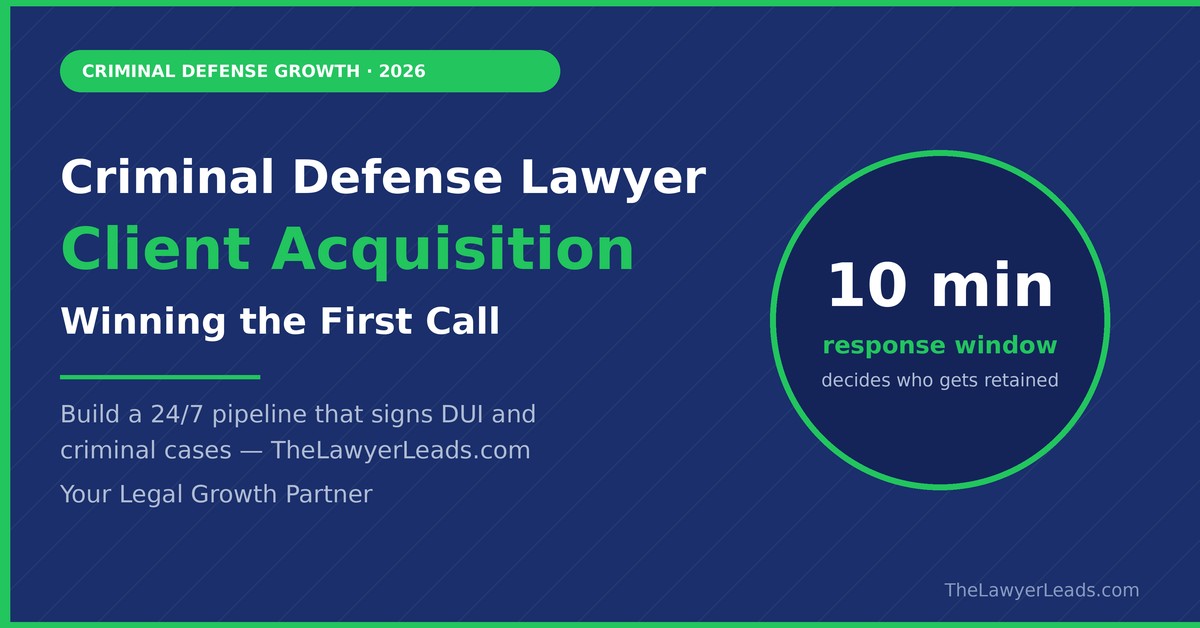
Benchmark to test: if your average response time to a new criminal inquiry exceeds 10 minutes outside business hours, you are likely leaving your best-converting cases to competitors.
Segment Your Case Types Before You Spend a Dollar
“Criminal defense” is not one product. A first-offense DUI, a federal white-collar investigation, and a felony drug charge differ enormously in value, urgency, and the budget the client brings. A growth partner approach starts by deciding which segments fit your firm’s capacity and fee structure.
Match the segment to the economics
| Case Segment | Typical Buying Window | Pipeline Priority |
|---|---|---|
| DUI / DWI | Hours to 3 days | High volume; speed-to-contact is decisive |
| Misdemeanor (theft, assault) | 1–7 days | Steady volume; strong for payment-plan fees |
| Felony (drug, weapons, violent) | Hours to 2 weeks | Higher fees; requires consultation depth |
| Federal / white-collar | Days to weeks | Referral and authority driven; low volume |
| Expungement / record sealing | Weeks to months | Predictable, schedulable, nurture-friendly |
Many firms discover that expungement and record-sealing inquiries, though lower in urgency, create the steadiest revenue and smooth out the volatility of arrest-driven demand.
Build an Intake System for a 24/7 Buyer
You do not need a night-shift paralegal to compete. You need a system. The firms that convert best on criminal defense lawyer client acquisition typically combine four elements:
1. Live or answered-by-human coverage after hours. A trained answering service that can book a consultation beats voicemail every time. 2. Instant text-back. An automated message within 60 seconds, followed by a real call, signals that someone is on it. 3. A short, scripted qualification. Capture the charge, court date, custody status, and who is calling before discussing fees. 4. A clear next step. Offer a specific consultation time, not “we will get back to you.”
Consider the referral layer as well. Bail bondsmen, civil attorneys, and family law colleagues all meet defendants at their worst moment. A small, well-maintained referral network, with prompt thank-you notes and clear communication back to the referrer, can quietly supply a meaningful share of retained felony and misdemeanor cases at almost no acquisition cost.
Key Insight
Criminal defense prospects rarely compare fees first. They compare who sounded calm, competent, and available. Train intake to lead with the court date and the next step, then discuss cost.
Qualify Inquiries So Attorney Time Goes to Signable Cases
Urgency attracts noise: people calling about someone else’s case in another state, prospects seeking free advice, or matters outside your jurisdiction. Whether inquiries come from your own marketing or from a partner, apply a consistent screen before an attorney gets involved.
| Screening Factor | Weak Process | Disciplined Process |
|---|---|---|
| Jurisdiction check | Discovered on the consultation | Confirmed in the first 60 seconds |
| Exclusivity of the inquiry | Same prospect called five firms | Verified as exclusive to your firm |
| Fee conversation | Avoided until the end | Framed early with payment options |
| Follow-up cadence | One call attempt | Call, text, and email within 24 hours |
| Tracking | Calls counted | Cost per signed case measured |
Measure the pipeline by cost per signed case, not cost per inquiry. A cheaper inquiry that never retains is the most expensive source you have.
Ethical and Compliance Guardrails Matter More Here
Criminal defense advertising draws close scrutiny. Solicitation of people recently arrested is restricted in many states, and bar rules on testimonials, case-result claims, and “specialist” language vary. Build your campaigns around inbound demand, such as search, local presence, and referral relationships, and have your messaging reviewed against your state bar rules before launch. Never promise outcomes.
Criminal Defense Pipeline: Summary
- Win the first conversation — respond in minutes, including nights and weekends.
- Segment by case type — prioritise the matters that fit your capacity and fee model.
- Systemise intake — text-back, scripted qualification, and a booked next step.
- Screen before attorney time — confirm jurisdiction, exclusivity, and fee readiness early.
- Track cost per signed case — judge every source by retained clients, not raw inquiries.
- Stay inside bar rules — build on inbound demand and review messaging for compliance.
Ready to Build a Criminal Defense Pipeline That Signs?
TheLawyerLeads.com is your legal growth partner, helping firms reach high-intent prospects in the practice areas that fit their goals.