
A three-partner firm in Phoenix spent eighteen months publishing blog posts and still got its best calls from a single “car accident lawyer” page written in 2019. The problem was never effort. It was that the firm had one page doing the work of ten.
If you want to grow your practice through organic search, law firm practice area pages SEO is where the return lives. Practice area pages are the pages prospective clients land on when they are ready to hire, and they are where rankings, trust, and intake finally meet. Yet most firms treat them as brochure copy rather than as the core of their client acquisition system.
This guide covers how to structure practice area pages that earn rankings and convert visitors into consultations, based on what consistently separates growing firms from those stuck on page two.
Why Practice Area Pages Outperform Blog Content
Blog posts attract researchers. Practice area pages attract buyers. A person searching “how long do I have to file a personal injury claim” is gathering information; a person searching “personal injury lawyer Tampa” is choosing counsel. Search intent at the second level is commercial and local, and it is where a signed case is most likely to originate.
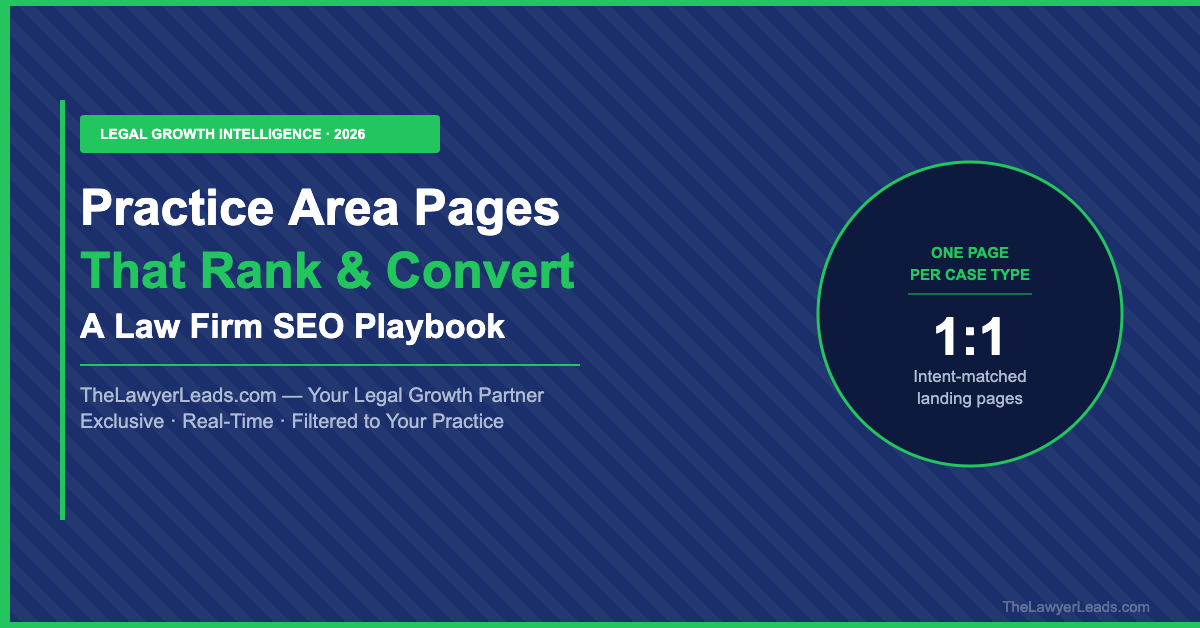
The most common mistake we see is a single generic “Practice Areas” page listing twelve services in bullet form. Google cannot tell which query it should rank for, and the visitor cannot tell whether you handle their exact situation. One page per case type, per core location is the standard worth building toward.
Strategic note: Pages that match a single service to a single intent typically convert visitors into inquiries at a meaningfully higher rate than catch-all pages, because the visitor immediately sees their own situation reflected back.
Structuring Law Firm Practice Area Pages SEO Can Reward
Strong pages share a consistent anatomy. Build each one around the following elements before worrying about word count.
Lead with the client problem, not your credentials
Open with the situation the visitor is in and what happens next. Credentials belong on the page, but after you have shown you understand the stakes. A bankruptcy page should begin with wage garnishment and creditor calls, not the year the firm was founded.
Answer the questions intake hears every day
Your intake team already knows the ten questions callers ask before they book. Turn those into a FAQ section with direct, two-to-four sentence answers. This serves visitors, improves eligibility for featured snippets, and reduces unqualified calls.
Prove it with local evidence
Case results (where your bar rules permit), named local courts, neighbourhood references, and attorney bios with verifiable credentials all signal relevance. Add clear, compliant disclaimers and keep every claim defensible.
Key Insight
A ranking earns the visit; the page earns the call. Put a phone number, a short consultation form, and a one-line promise about response time above the fold on every practice area page.
Converting the Traffic You Earn
Rankings without conversion architecture are an expensive hobby. Once a page attracts qualified visitors, three things determine whether they become consultations: speed, clarity, and follow-up. Pages should load in under three seconds on mobile, present a single primary call to action, and route every inquiry to someone who responds within minutes, not hours.
This is where organic strategy and a broader client pipeline reinforce each other. Search builds durable, compounding demand over months, while complementary channels supply consistent volume in the meantime. Firms that combine both are far less exposed to a single algorithm update.
Generic Pages vs. Intent-Matched Pages
| Element | Generic Practice Page | Intent-Matched Page |
|---|---|---|
| Search target | “Legal services” (vague) | “Divorce lawyer + city” (specific) |
| Opening copy | Firm history | Client problem and next step |
| FAQ section | None | 8–10 real intake questions |
| Primary call to action | Several competing links | One clear consultation prompt |
| Internal links | Few or none | Linked from hub, related services, and blog |
A Simple Rollout Plan
You do not need to rebuild your site in a month. Start with the two case types that produce your highest-value matters, rewrite those pages using the structure above, and measure calls and form submissions for sixty days. Then expand to the next tier of services and your second location.
Track leading indicators too: impressions for target queries, click-through rate, and the share of inquiries that match your ideal case profile. When a page ranks but does not convert, fix the page before chasing more traffic.
Practice Area Page Checklist
- One page per case type — give each core service its own URL and search intent.
- Lead with the client problem — show you understand their situation before listing credentials.
- Answer real intake questions — build FAQs from what callers actually ask.
- Add local proof — courts, neighbourhoods, bios, and compliant results.
- Design for conversion — one call to action, fast mobile load, rapid follow-up.
- Measure and iterate — track calls, forms, and case quality for 60 days.
Build a Pipeline That Doesn’t Wait on Rankings
Pair your organic strategy with exclusive, practice-area-filtered client opportunities while your pages gain traction.